



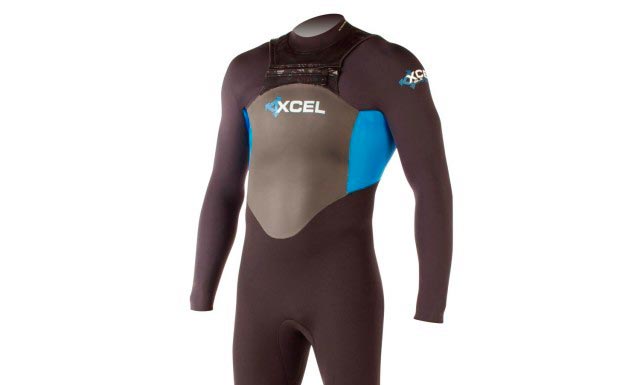
 How a wetsuit keeps you warm, depends on many factors.
You can name and type of wetsuit, and the location and appearance of lightning, as far as the costume fitting, its thickness. When choosing a wetsuit is important to consider all these values.
We consider in detail the question of the thickness of the wetsuit. In the product description usually meet one, two or three digits indicating the thickness of the neoprene in millimeters. The thickness of the neoprene will be different in different parts of the wetsuit.
So for example in the area of the hands and feet thickness will be less and less, so the costume does not restrict movement of the surfer. In addition, the numbers on the label can be separated by the fraction (/) or zero. Then each digit corresponds to the thickness of the various elements of the costume.
Typically, the first digit refers to the thickness of the neoprene in the torso area, while the second and sometimes the third thickness in the sleeves and legs. Give examples of nickolich descriptions.
Heat 6/5/4mm Hooded Full Wetsuit
The suit is designed for very cold water. On the trunk the thickness of the suit is 6 mm, arms – 5 mm, and the legs 4 mm.
Epic 2 Ct 5/3 Wetsuit
Another option, suitable for cold water. It is suitable for servigne in the winter, for example off the coast of England. The thickness of the material on the torso is 5 mm, the sleeves and legs of 3 mm.
Heat 3q 302 Full Back Wetsuit.
Here in the marking meets the delimiter is zero. This model is designed for warmer conditions and it is significantly thinner than the winter model. Epic 2mm S/S Full Wetsuit Back In the description of the costume we see only one figure: 2 mm. This means that the thickness of the same suit in different parts and is 2 mm.


Leave a Reply